As the granddaughter of four Holocaust survivors, I grew up in both the shadow and light of survival. I was raised hearing stories - both devastating and miraculous - of loss, courage, and unbreakable faith. After the Holocaust, my grandparents completely rebuilt their lives, bearing invisible scars, but showing an extraordinary will to live, love, and create families full of Jewish joy.
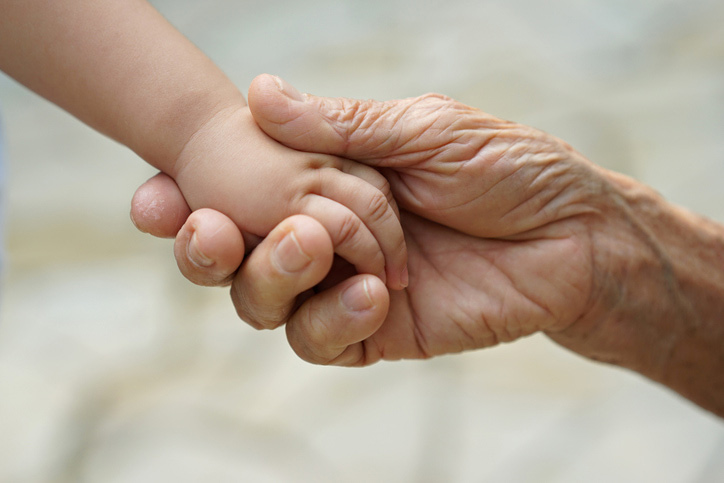
Now I feel a sacred responsibility to pass on their stories to my three young daughters. It is truly miraculous that my children are the great-grandchildren of eight survivors. I want them to understand that their existence is the very definition of resilience. Especially today, when antisemitism has resurfaced widely, remembering where we come from has never been more important. Our family’s narrative reminds us that resilience is in our DNA.
“I want them to understand that their existence is the very definition of resilience.”
Growing up, I always knew about the Holocaust and the foundation of the state of Israel. Both events were central to our family traditions and history. Today, on my own journey as a parent, seeking to balance it with my work as a Jewish advocate and activist, I am committed to sharing family stories, but in a way appropriate to my daughters’ ages and the world we live in. (When I was a child, my parents certainly didn’t have to contend with social media and online news outlets.)
Here are my tips for talking to your kids about your family’s legacy:
1. Focus on the people first
My kids know who their grandparents and great-grandparents are as people, first and foremost. Each of my children is named after two of their great grandparents. We discuss the traits they have inherited from their namesakes, the family traditions our relatives carried with them, and some of my favorite stories about each person.
2. Keep them on an information diet
My three daughters are fairly young, ranging in age from just under a year old to six. None of them is in a place to understand, fully, the enormity of the Holocaust. It is enough right now that they know their great-grandparents came from other places, why Israel is so important to our family, and their great-grandparents’ characters and personalities. While I am honest with them, at this age, their learning experiences are grounded in joy.
My nieces and nephews, who are much older, know our family story through and through. My family started introducing them to more of the details around when they were ready for general Holocaust education (recommended age, about 10). They have come to hear me speak and heard me share our family story directly. They have also spoken to survivors and heard first hand accounts directly (which I highly recommend for children who are mature enough).
3. Let joy be the guide
The way I tell my family history is evolving as my daughters grow up, and it is geared to what stage each is at in their childhood. In this moment, I keep things age-appropriate, but I am also honest. I know that our children are much more perceptive than many adults give them credit for. I do not shy away from really difficult or challenging conversations because I don't want topics they will need to engage with to feel taboo.
When the living hostages were returned recently, we discussed it together. We talked about how the hostages had been taken from their homes and separated from their families for a very long time. But we focused on the joy of the moment and of families being back together again.
4. Answer their questions, even if it’s to say ‘I don’t know’
Kids are more resilient than they get credit for, and it’s good for them to know where they come from. Be prepared for questions and don’t shy away from answering with the truth. Consider the way we share traditional stories with our children-they learn a simple version of the Purim story focusing on bravery and courage when they are little. As they get older, they learn more pieces of the story every year. By the time they reach b'nai mitzvah, they know a more complete and complex version.
5. Don’t be nervous
Our history reminds us that the Jewish people are incredible and resilient. While there is tragedy in our past, there is also a lot of light, joy and Jewish pride. Explaining to my children how their ancestors came through tragedy and moved forward feels incredibly important in guiding how my children think about the Jewish people. We are a light in the darkness. We survive and we thrive. We are born from miracles. That’s all beautiful, and a story that should be told with a huge sense of pride.
I encourage parents not to shy away from sharing your family stories, even the dark and difficult parts. I share mine so that my daughters know their past and can move into the future with unshakable strength, compassion, and pride. We are the continuation of those who survived despite all odds. And that is the most powerful story we can ever tell.
About the Author
Amanda Markowitz is a Jewish thought leader, actor, producer, and speaker, whose personal history is deeply rooted in legacy, as the granddaughter of four Holocaust survivors. She shares her family's stories to educate and inspire remembrance, resilience, and awareness. Amanda frequently leads community panels and hosts intimate conversations that seek emotional truth and purpose. Her work strives to build bridges - on screen, in communities, and in conversation. Amanda lives in Los Angeles with her husband, their three young daughters, and their two rescue dogs. She is a proud PJ Library mom!
More
Books About the Holocaust for Young Readers
How to Talk about the Holocaust With Young Children
The Power of Sharing Family History and Stories
Watch Interviews With Holocaust Survivors via the United States Holocaust Memorial Museum
December 1, 2025