Community and Resilience in Sydney
After last December’s tragic terror attack, the Jewish community finds its way forward.
By Rachel Zaimont, Managing Editor
This story appeared in the summer 2026 issue of PROOF, a PJ Library magazine.
On December 14, 2025, hundreds of Jewish revelers had gathered for a Hanukkah celebration at Bondi Beach in Sydney when the unthinkable occurred: Two gunmen opened fire, killing 15 and wounding nearly 40 more. The world watched the news in shock as details emerged about the tragedy — the deadliest attack targeting Jewish people since the events of October 7.
To understand the Jewish community in Sydney, the atmosphere leading up to the attack, and what has changed in its aftermath, we sat down with Alain Hasson, CEO of Jewish Communal Appeal (JCA). As head of the primary organizational funder of PJ Library in Sydney and the wider New South Wales (NSW) and Australian Capital Territory (ACT) regions, Alain shared his insight into the state of the Jewish community, its response in the wake of the attack, and the role PJ Library can play on the road to healing.
Rachel Zaimont: Tell us about the Australian Jewish community and its relationship with Australian society in general.
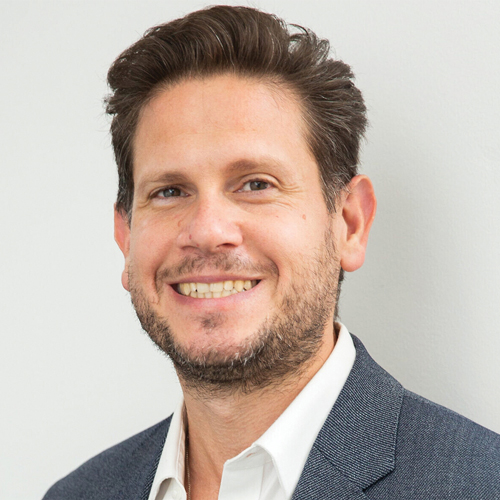
PHOTO COURTESY OF ALAIN HASSON
Alain Hasson: The Australian Jewish community is the ninth-largest Jewish population in the world and is a diverse multicultural Jewish community largely made up of expats, a majority of whom arrived from South Africa, Israel, and the former Soviet Union. Only recently, the population has tipped toward a majority of Australian-born Jews. Per capita, Australia has the highest number of Holocaust survivors in the world outside Israel. But the Australian Jewish community has been here since the first fleet 200 years ago; the Jewish population has been instrumental in the history and identity of Australia.
For Australian Jewry, this has been a safe diaspora community. Pre-October 7 — or pre-October 9, when the protests happened at the Sydney Opera House — you would say this was a utopia. We have a highly multicultural society that has been very warm and accepting, with bipartisan support of Israel. No one felt anything other than safety and freedom to practice their Jewish identity in Australia. Pre-October 7, our community was largely becoming more secular and progressive because of that acceptance and integration. But I think October 7 and now December 14 have started to change that. A lot of people who had broader non-Jewish networks now feel more safety among their own Jewish community. That is bringing the Jewish community closer together.
RZ: We all watched in horror when news of the attack broke on December 14. What do you want the Jewish community around the world to understand?
AH: This was shocking for the Australian Jewish community and was the pinnacle of two-and-a-half years of pain. Australian-born Jews never really experienced antisemitism in Australia, but then we saw the October 9 protests at the opera house and felt danger building. There were warnings and warnings — we said to the government, “If you do not do anything, this will lead to a significant attack on our community.” And the attack happened, and it was the worst thing we could have imagined.
The day after the attack, I reached out to my global Jewish network and asked, “What do we do? What are the lessons learned from communities who have dealt with this?” Jeff Finkelstein, the CEO of the Jewish Federation of Greater Pittsburgh, was very kind to send through their learnings after the Tree of Life attack in 2018. One of the saddest things that people said was “Welcome to the club.”
General Australian society is in shock. Most people never expected that anything of this nature could happen in Australia. This wasn’t just an attack on Australian Jewry; it was an attack on Australian society at an iconic location, and people are now asking how this happened. This is the worst terrorist incident to happen in Australia. Australia has not experienced events like 9/11 or the London Tube bombings and doesn’t have that experience with radical terrorism. This is a global problem well beyond the Jewish community.
RZ: How has the community changed in the aftermath? Is there more connectedness within the Jewish community or feelings of connection with the wider Jewish world?
AH: Definitely. The NSW Jewish community rallied and has been working together more closely than I’ve ever seen. There is unbelievable collaboration between organizations in the mental health and welfare spaces, those supporting the victims. We all came together to support the Chabad community of Bondi, which was at the epicenter of this. People have largely overcome differences to ask, “How do we work together for the betterment of this community?” We can’t succumb to this. Our response has to be, “If you try and hurt us, you’re only going to make us stronger.”
RZ: How does JCA work, and why does it provide funding for PJ Library?
AH: JCA is the centralized fundraising organization for the local Jewish community of NSW and ACT. JCA is the closest equivalent Australia has to a Jewish federation. We fundraise, plan, and allocate funds to serve the needs of the Australian Jewish community. Our research shows that when it comes to Jewish identity building blocks, there are five pillars: synagogue, youth movements, Israel, Jewish education, and — at the center of it all — home. The home has more impact on Jewish identity than any other point of Jewish connection. Even before I had children, I’ve always looked at PJ Library as one of the best programs for getting into the home and letting families connect with their kids about Jewish identity. That ability to sit with your child and tell a story about their culture — that plants seeds of Jewish identity throughout childhood.
RZ: Is PJ Library especially relevant in Australia right now?
AH: We’re still learning how families and individuals are being affected by the trauma of this attack. One of the amazing things that PJ Library does is it gives parents tools to take their kids through some of the challenges that we face as Jewish people. Children are going to have ongoing hard questions, and parents will need to have hard conversations with their kids. Books can help families have these conversations. Storytelling is one of the most critical things we can do.
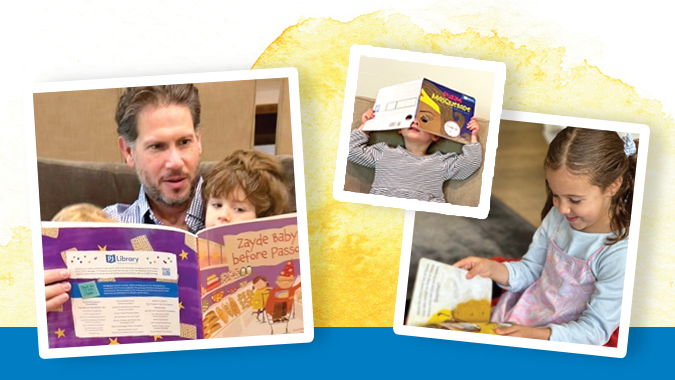
PJ Library books can help families address difficult topics with children.
PHOTOS COURTESY OF PJ LIBRARY IN AUSTRALIA AND ALAIN HASSON
In 2011, PJ Library launched its first international program in Australia. Now the program reaches 3,600 children each month with a book delivered to their home — a reliable point of Jewish connection during a challenging time.
“PJ Library plays an important role for families in NSW and ACT. In a time when Jewish families are seeking connection and a stronger sense of identity, it provides a gentle-but-powerful anchor to Jewish life. Our impact is greater than ever in the aftermath of crisis — we have been able to reach out directly to families, helping them feel part of a community.”
- Wendy Dolowitz, director of PJ Library in NSW and ACT