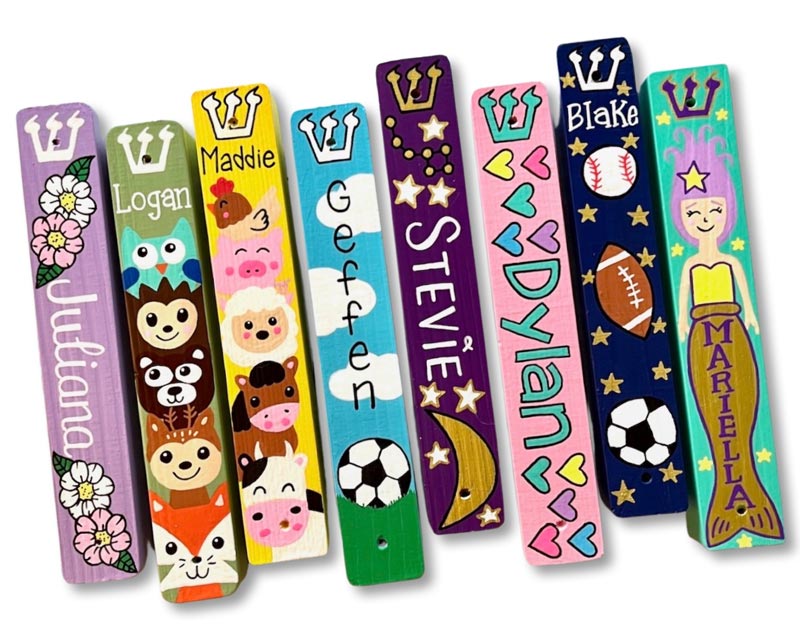
Many Jewish families have something special attached to a doorframe of their home, a little object called a mezuzah. It’s a small case that holds a klaf, a piece of parchment. On the parchment, written by a specially trained scribe, are Hebrew words from the Torah, including the Shema, one of the best-known Jewish prayers.
I like to think of each mezuzah as a tiny work of art. Even though it’s small, there’s room for so much personality—dinosaurs, rainbows, favorite places, beloved pets, or anything else that makes a child smile. It’s especially meaningful when one created just for them becomes part of their family’s Jewish life. I love hearing stories of children helping to put up their own mezuzahs.
The word mezuzah means “doorpost” in Hebrew. For thousands of years, Jewish families have placed mezuzot (plural of mezuzah) on their doorposts as a way to make their homes feel connected to Judaism. A mezuzah can be a little reminder of the Jewish values, stories, and traditions that are important to a family. It’s like a little Jewish “welcome home” on the door.
Mezuzot can be simple and traditional, or colorful and playful. Some families have one customized to reflect their particular taste and style. Take a look at some examples from my shop, LeaJoelleHandmade, below:
Mezuzot can be made from wood, metal, acrylic, ceramic, and other materials. And this is where things get really fun: They can feature flowers, animals, rainbows, sports, cars, dinosaurs, or almost anything else you can imagine.
The best part? The outside of one mezuzah can look totally different from another, but the parchment inside is what makes it a mezuzah.
Where does a mezuzah go?
Traditionally, a mezuzah is placed on the doorpost to the right as a person enters a room or home. Take a look around: A Jewish home might have a mezuzah on the front door, as well as on other doorways. Some families hang a mezuzah outside every room (except for the bathroom).
According to custom, when Jewish people pass a mezuzah, they reach up and touch the mezuzah, then kiss their fingers. This is a way to show love or respect for the mezuzah and the Jewish traditions it represents. But there are many different ways families interact with their mezuzot.
As with many ritual objects, or Judaica, a mezuzah may have a story behind it. It might be a gift received for a new baby, a housewarming present, or something a family chose together when they move into a new home. Jewish families around the world have mezuzot on their doorposts, with designs that reflect their communities, cultures, and individual families.
A mezuzah may be a tiny object, but it carries a big story about Jewish life, family, and tradition.
About the Author
Jenni Arielly is the owner of LeaJoelleHandmade, a small business creating beautiful, custom Judaica for families around the world. From colorful hamsas and personalized mezuzah cases to other special pieces, each creation brings personality and artistry to Jewish traditions. Learn more at LeaJoelleHandmade.
Jenni adds: “At LeaJoelleHandmade, we are honored to be part of these meaningful milestones and everyday traditions. Through our 2026 partnership with PJ Library, every children’s order will include a PJ Library book, giving families a way to celebrate Jewish traditions through both meaningful rituals and the joy of Jewish storytelling.”
More
Shabbat Books
Nervous About Hosting Your First Shabbat?
Easy Challah Recipes to Make with Your Kids
November 12, 2026